Expert’s Desk · Athlete Health
Creatine: what does it do, and is it safe? Dose, side effects and common myths

Short answer
Creatine is one of the few dietary supplements with strong evidence for improving strength and short, high-intensity exercise performance. In healthy adults it is considered safe at recommended doses. The body makes creatine itself and also gets it from meat and fish. Supplementation raises the creatine store in muscle by about 20%. Averaged across 22 studies, strength in people doing resistance training rose by 12% with placebo and by 20% with creatine. However, the response varies a great deal from person to person, and creatine does not replace training. The practical dose is 3–5 grams of creatine monohydrate a day; an initial "loading" phase is not necessary.
Most of the common fears are not supported by the evidence. In controlled studies in healthy people, creatine has not been shown to impair kidney function; very rare cases of kidney injury have, however, been reported. It can also raise the creatinine value in a blood test, which can lead to the result being misread. The hair loss concern rests on a single small study; a 12-week randomised trial that measured hair directly found no difference. Creatine has not been shown to cause cramps or fluid loss either. With loading, weight can go up by 1–3 kg in the first week, most of it water. If you have kidney disease, are pregnant or breastfeeding, or are under 18, talk to your doctor before starting creatine.
Contents
What is creatine, and what does it do in the body?
Creatine is a natural compound made in the liver and kidneys, mainly from the amino acids arginine and glycine. About 95% of the body's creatine is in skeletal muscle; a small amount is in the brain and other tissues. A normal diet that includes meat and fish provides 1–2 grams of creatine a day; a pound (about half a kilo) of raw beef or salmon contains about 1–2 grams. On this diet, muscle stores are roughly 60–80% full.
Much of the creatine in muscle is stored as phosphocreatine. Phosphocreatine regenerates ATP, the muscle's immediate energy source, within seconds. That is why it plays a key role in high-intensity efforts such as sprints, jumps, heavy lifts and the repeated short bursts of team sports. Supplementation fills this store. In one study, taking 20 grams a day for 6 days raised total muscle creatine by about 20%, and 3 grams a day reached the same level in 28 days. When supplementation stops, the store returns to its previous level in 4–6 weeks.
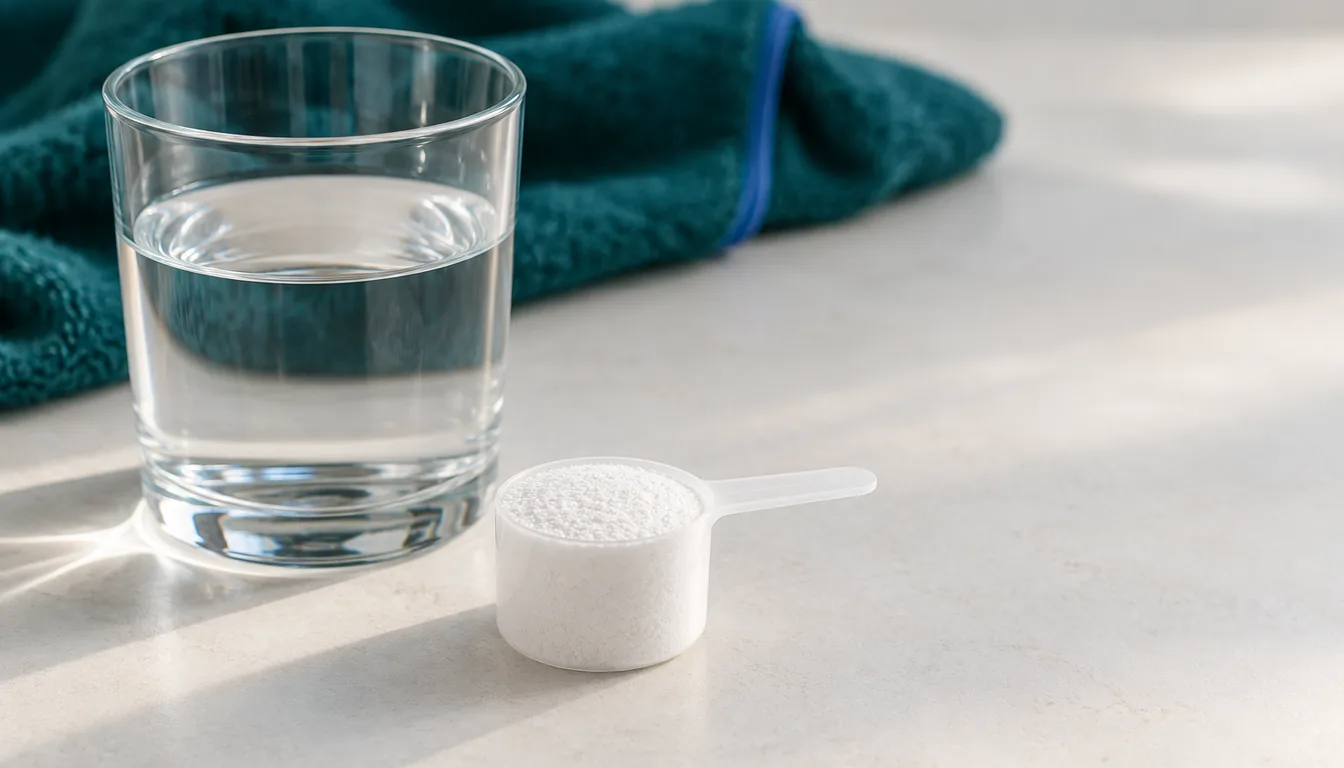
Creatine is not an anabolic steroid or a hormone, and it is not banned by any sports organisation; nor is it on the World Anti-Doping Agency (WADA) prohibited list.
What does it do for sport, and what doesn't it do?
The strongest evidence comes from using creatine together with resistance training. In a review of 22 studies, strength increased by an average of 20% with creatine during training, compared with 12% with placebo. The increase in the number of repetitions possible at a given weight was 26% versus 12%. In the same review, the gain in bench press strength ranged from 3% to 45% from study to study; the authors note that the response also varies greatly from person to person. A meta-analysis of 60 randomised trials on leg strength also found a small but consistent benefit for efforts lasting less than 3 minutes. No difference in this benefit was found by age, sex or physical activity level.
In practical terms, creatine increases the effect of training by allowing a few more repetitions and sets to be completed. The most consistent benefit is seen together with resistance training; results with use without training are conflicting.
The International Olympic Committee (IOC) 2018 consensus statement also notes that only a few of the supplements claimed to improve performance have good evidence behind them: caffeine, creatine, some buffering agents and nitrate. The same statement recommends that any supplement be tried in training before it is used in competition.
The benefit of creatine may be limited or uncertain in these situations:
- Long endurance sports: In sports such as marathon running or long-distance cycling, its contribution to performance is less consistent than in short, high-intensity efforts.
- Sports where body weight matters: In running, climbing and weight-class sports, the weight gain of the first weeks can be a disadvantage.
- People whose muscle stores are already high: The increase is smaller when starting stores are high. People with low stores, such as vegetarians, respond more clearly to supplementation.
Muscle loss after injury: In 22 young volunteers whose leg was in a cast for 2 weeks, the cross-sectional area of the front thigh muscle fell by about 10% in both groups; in other words, creatine did not reduce muscle loss during the period in the cast. During the 10 weeks of rehabilitation that followed, muscle size and muscle power recovered faster in those taking creatine. In contrast, in 37 patients undergoing knee replacement surgery, creatine given before and after the operation made no difference to strength or function. Studies in this area are small and their results conflict. Creatine therefore cannot be recommended as a routine part of rehabilitation after injury, and it does not replace a rehabilitation programme.
How to take it: dose, loading and form
- Form: The most studied form, with the best-known efficacy and safety, is creatine monohydrate. It is also usually the cheapest. There is no evidence that more expensive forms such as creatine ethyl ester, creatine hydrochloride or "buffered" creatine are more effective or safer than monohydrate. In one reported case, creatine ethyl ester raised blood creatinine enough to mimic kidney failure.
- Daily dose: 3–5 grams a day for most adults. Taken regularly every day, it fills muscle stores in about 4 weeks. According to the ISSN position stand, larger athletes in intense training may need 5–10 grams a day to maintain their stores. The "0.1 grams per kilogram" dose used in some studies is not equivalent to 3–5 grams; for a 70 kg person it comes to about 7 grams a day.
- Loading (optional): To fill the stores faster, a total of about 20 grams a day (roughly 0.3 grams per kilogram per day) can be taken for 5–7 days. This amount is split into 4 × 5 gram doses through the day, followed by 3–5 grams a day. Loading does not change the final level that muscle creatine reaches; it only means that level is reached in about 1 week instead of about 4 weeks. So without loading, the performance effect in the first weeks may be less noticeable. The cost of loading is a possible 1–3 kg weight gain in the first week. In addition, taking more than 10 grams at once can cause stomach and bowel complaints such as diarrhoea.
- Which to choose: If there is a goal for which the effect is wanted within a month (e.g. an upcoming competition period), loading can be considered. If long-term use is planned, or if sudden weight gain is to be avoided, simply starting with 3–5 grams a day is enough.
- Timing: There is no consistent evidence that taking it before or after training makes a meaningful difference. What matters is taking it every day, including rest days.
- Preparation: Once the powder is mixed into water or a drink, it should not be left to stand for long. When creatine sits in liquid for a long time, especially in warm conditions and in acidic drinks, it breaks down into creatinine. Ready-made liquid products may therefore contain less of the active ingredient.
Is it safe? Kidneys, hair, water retention and cramps
Creatine has been examined in hundreds of studies and is considered safe at recommended doses in healthy adults. According to the 2017 position stand of the International Society of Sports Nutrition (ISSN), both short-term and long-term use has been well tolerated in healthy people. It should also be noted that some researchers in this field have links with the supplement industry. Even so, the IOC consensus statement also lists creatine among the small number of supplements with good evidence. Here is what the evidence says about the most common concerns:
Kidneys: Creatine is converted to creatinine in the body. And the blood creatinine value is the test most often used to assess kidney function. This means a creatine user's creatinine can go up even when their kidneys are healthy. In two 2026 meta-analyses of randomised trials, creatine raised blood creatinine by an average of 0.13–0.14 mg/dL. For the same reason, the kidney filtration rate calculated from creatinine (eGFR) can come out lower; one of these meta-analyses found a significant fall. In contrast, studies that measured the kidneys' filtration rate with a method independent of creatinine found no meaningful difference, and neither did other markers such as urea and protein in the urine. In other words, a higher creatinine and a lower eGFR usually reflect the test being affected by creatine rather than kidney damage. Tell your doctor that you take creatine before a blood test. This evidence has clear limits: most studies were done in young, healthy people and lasted less than a year. Safety data for people with kidney disease are insufficient. In addition, very rare cases of kidney injury with allergic inflammation of kidney tissue (acute interstitial nephritis) have been reported in people taking creatine. In one of these cases the person was also taking many other supplements at the same time and recovered completely after stopping them, so cause and effect is not certain. The international kidney disease guideline KDIGO (2024) lists creatine, on the basis of these cases, among supplements that may harm the kidneys. The guideline asks that people with kidney disease be asked about unprescribed supplements and advised to stop any that may pose a risk to the kidneys.
Hair loss: This concern comes from a 2009 study in 20 rugby players. In that study, after creatine loading, the hormone dihydrotestosterone (DHT), which is linked to hair loss, rose by 56%, but hair was never measured. In a 12-week randomised trial published in 2025 that examined hair directly (5 grams a day, 38 young men completing the study), there was no difference between the creatine and placebo groups in DHT levels, hair density or hair thickness. This study is also small and short, and it did not assess whether participants had a family history of hair loss. Even so, the current evidence does not show that creatine causes hair loss.
Water retention and weight gain: With a loading dose, a 1–3 kg gain in the first week is common, and most of it is water. Creatine draws water to itself; as muscle stores fill, the muscle also holds a little water. The results of longer training studies, however, are mixed: some have shown no increase in total body water. In an 8-week study, body water rose more in the creatine group, but the rise stayed in proportion to the gain in muscle mass. Creatine does not increase fat mass either.
Stomach and bowel complaints and other side effects: Creatine is generally well tolerated, but it is not entirely free of side effects. In a randomised trial in which 123 people took 5 grams a day, the proportion reporting any side effect was 17% during the creatine period and 4% during the placebo period. The most common complaints were digestive problems (6% vs 2%) and weight gain (3% vs 0%). Nobody left the trial because of these side effects. Complaints such as diarrhoea are more likely when more than 10 grams is taken at once.
Cramps, fluid loss and injury: It is widely believed that creatine causes muscle cramps, fluid loss (dehydration) or heat illness. In college football players followed over three seasons, creatine users did not have more cramps, heat-related problems, muscle strains or other injuries. This study was not randomised; the players chose for themselves whether to take creatine. Still, reviews summarising controlled studies have reached a similar conclusion. For more on cramps, see muscle cramps: causes and prevention.
Product safety: A separate risk from creatine itself is that the product may contain substances that are not on the label. In an international study of 634 supplements bought in 13 countries, 14.8% contained an anabolic steroid not declared on the label. These data are from 2000–2001 and are not specific to creatine; however, the IOC's 2018 statement also draws attention to this ongoing risk. For licensed competitive athletes this is a doping risk. A plain product containing only creatine monohydrate and tested for doping substances by an independent laboratory should therefore be preferred.
Who might it make sense for?
- Strength and power athletes, team sport players: The most consistent benefit is in this group, in training that involves heavy lifting, sprints and repeated bursts.
- Vegetarians and vegans: Because they get no creatine from their diet, their muscle stores are lower. In an 8-week study, vegetarians responded more to supplementation than meat eaters in terms of muscle creatine, lean mass and total work capacity.
- Older adults: Muscle mass and strength decline with age (sarcopenia). In a meta-analysis of 22 randomised trials including 721 people with average ages ranging from 57 to 70, adding creatine to resistance training increased lean mass by an average of 1.37 kg more than placebo. A small additional gain was also seen in chest and leg press strength. Because lean mass measurements also include water held in muscle, not all of this gain is new muscle tissue. The most consistent benefit is seen when creatine is used together with resistance training. A new study has reported benefits in middle-aged people who did not exercise, but results with use without training are conflicting. For the health effects of strength training, see strength training: a health dose at every age.
- Women: Most of the evidence comes from men. Benefits have also been reported in women, and women were included in the older adult meta-analysis. However, some studies have found a weaker response in women. One possible reason is that women may start with higher muscle creatine levels.

However, it has not been shown to increase bone mineral density. In a 2-year randomised trial in 237 postmenopausal women, creatine taken with exercise did not affect hip or lower-back bone mineral density differently from placebo.
Brain and memory: promising, but not proven
Creatine also plays a role in the brain's energy metabolism. Supplementation can raise creatine in the brain too, but not as much as in muscle. In a study of 6 volunteers, taking 20 grams a day for 4 weeks raised brain creatine by an average of 8.7%, with the rise varying from 4.7% to 14.6% by region. In muscle, in a different study, the same dose produced a rise of about 20% in 6 days. How far this rise in the brain translates into a cognitive benefit is not known.
A 2023 meta-analysis combining 8 randomised trials in healthy people reported, when it was first published, that creatine slightly improved memory. However, in that analysis several different memory tests given to the same people were counted as if they were separate studies. This error makes the number of participants look larger than it is and can make a chance result look like a real effect. When the error was corrected, the overall effect was no longer statistically significant, and a significant result remained only in older people. That subgroup, however, consists of only two studies. The small study that gave 20 grams a day for one week found a benefit, while the study that gave 5 grams a day for 24 weeks found no difference. Because age, dose, duration and the tests used all differed between these two studies, it is not possible to speak of a benefit specific to older age. Another meta-analysis from 2024, combining 16 studies, also reported a small effect on memory. EFSA noted that this analysis, too, counted the same participants more than once and that no conclusions can be drawn from it.
The dose question: Most of the positive findings come from two situations. The first is short-term high doses such as 20 grams a day. The second is single high doses given under demanding conditions such as sleep deprivation: 0.2–0.35 grams per kilogram, or roughly 14–25 grams for a 70 kg person. In studies lasting 6 weeks or more with the 3–5 grams a day recommended for muscle, the results are mixed. A 2003 study in 45 vegetarians reported an improvement in working memory after 5 grams a day for 6 weeks; however, EFSA left this study out of its assessment because of methodological problems. In a newer, pre-registered randomised trial of 123 people, the same dose for 6 weeks made no significant difference by conventional statistics, while a Bayesian analysis supported a small benefit. In this trial vegetarians did not benefit more than meat eaters. In the only randomised trial with creatine monohydrate that compared doses directly, 10 and 20 grams a day for 6 weeks did not differ from placebo either. In short, it has not been shown that memory improves as the dose goes up, and no consistent benefit of established clinical importance has been shown with 3–5 grams a day either.
The European Food Safety Authority (EFSA) assessed a manufacturer's application in 2024 and concluded that a cause-and-effect relationship between creatine and improved cognitive function had not been established. Some small studies have reported benefits, particularly under sleep deprivation. However, in healthy, rested people there is not enough consistent evidence to support routine creatine use, or the choice of a higher dose, to improve memory.
Who should be careful?
Studies of creatine in children and adolescents are limited. No serious side effects have been reported in the available studies, but the evidence is not as strong as in adults. In young athletes the priorities are adequate energy and protein intake, sleep and well-planned training. If creatine is being considered, the decision should be made together with a doctor or sports dietitian. In athletes who train hard, adequate energy intake should be checked before any supplement: relative energy deficiency in sport (REDs).
This article summarises the general evidence; it does not replace a medical examination and individual assessment.
For clinicians
Dose: On an omnivorous diet, muscle creatine stores are about 60–80% full. 20 g/day × 6 days or 3 g/day × 28 days raises total creatine to a similar extent (≈20%); after stopping, stores return to baseline in 4–6 weeks and do not fall below it (Hultman 1996; ISSN 2017). The maintenance dose is 3–5 g/day, or 5–10 g/day in larger athletes in intense training; 0.1 g/kg/day (≈7 g at 70 kg) is not equivalent to 3–5 g/day. Loading is optional (≈0.3 g/kg/day ≈ 20 g/day for 5–7 days, ≤10 g per dose); without loading, the ergogenic effect in the first weeks is less well supported. Efficacy: with resistance training, the gain in 1–10 RM strength is 20% vs 12% (Rawson and Volek; 22 studies, heterogeneous results); in the lower limb, ES for efforts <3 min is 0.24 (0.13–0.35; Lanhers; 60 RCTs). In older adults, the lean mass gain is +1.37 kg (0.97–1.76; Chilibeck 2017; 22 RCTs, n=721), but DXA lean mass also reflects changes in water (+0.51 kg in the first week in Desai 2025). Data on use without training are conflicting (Chun 2026 positive; only supplement allocation was randomised). There is no effect on bone mineral density (Chilibeck 2023; n=237, 2 years). During immobilisation, creatine did not reduce atrophy but sped up recovery on reloading (Hespel 2001; n=22); after knee replacement there was no difference (Roy 2005). Kidney: serum creatinine rises by ≈0.13–0.14 mg/dL, and creatinine-based GFR may be calculated as lower (Almeida 2026: −10.75 mL/min; 26 RCTs). GFR measured with Cr-EDTA, urea and proteinuria, however, do not change (Tsiaras 2026; Almeida 2026). There are no RCTs longer than 1 year. The abstract of the 2019 meta-analysis contradicts its own statistics; the two recent meta-analyses should be relied on. If kidney function is in question, stopping the supplement for a few weeks and repeating the test, or using cystatin C, is appropriate; KDIGO 2024 (Table 8) lists creatine supplements among the indications for cystatin C. KDIGO also lists creatine among potentially nephrotoxic supplements on the basis of case reports (acute interstitial nephritis; Koshy 1999, Thorsteinsdottir 2006) and recommends asking about unprescribed supplements in CKD. Safety data in CKD are insufficient. Hair and other safety: the DHT rise reported with loading (van der Merwe 2009; n=20, hair not measured) has not been confirmed as hair loss in an RCT that measured hair directly (Lak 2025; n=38, 12 weeks, no loading, family history not assessed; some authors have ISSN and industry ties). With 5 g/day, side effects are reported more often than with placebo (17% vs 4%; mostly digestive problems and weight gain; Sandkühler 2023). No increase in cramps or injuries has been shown, but the main study was observational (Greenwood 2003). The risk of undeclared AAS depends on the product (Geyer 2004: 14.8%, 2000–2001 data); licensed athletes should use products tested by an independent anti-doping programme. Cognition: no dose–response relationship has been shown for memory. The overall effect in Prokopidis 2023 (SMD 0.29) lost significance after correction for double counting (as reported by Citherlet 2026; the full text of the authors' reply could not be accessed). The remaining "older adult" signal comes from two studies and is confounded with dose (McMorris 2007: 20 g/day × 1 week, positive; Alves 2013: 5 g/day × 24 weeks, no effect). The meta-analysis's dose subgroups overlap completely with its duration subgroups. The only RCT comparing 10 and 20 g/day of monohydrate was negative (Moriarty 2023). In a pre-registered RCT of 123 people, the result with 5 g/day was borderline (Sandkühler 2023; BDS p=0.064, Bayesian analysis favouring a small benefit). Positive signals cluster at short-term high doses and at single high doses under sleep deprivation (0.2–0.35 g/kg; Gordji-Nejad 2024, 2026). Brain tCr rises by ≈8.7% with 20 g/day × 4 weeks (Dechent 1999; n=6). EFSA 2024 considered a cause-and-effect relationship not established.
Frequently asked questions
What does creatine do?
It fills the fast energy store that muscle uses for short, high-intensity efforts. Used together with resistance training, it makes a small but consistent contribution to gains in strength and muscle mass. Averaged across 22 studies, strength gains were 12% with placebo and 20% with creatine. Its effect is most visible in heavy lifting, sprints and repeated bursts. The most consistent benefit is seen when it is used together with training.
Does creatine damage the kidneys?
In controlled studies in healthy people at recommended doses, it has not been shown to impair kidney function; very rare cases of acute kidney injury have, however, been reported. In addition, because creatine is converted to creatinine in the body, the creatinine value in a blood test can rise. This rise may not mean kidney damage, but it can be misinterpreted. So tell your doctor that you take creatine before a blood test. If you have kidney disease, always talk to your doctor before starting creatine.
Does creatine cause hair loss?
The current evidence does not show this. The concern comes from a 2009 study in 20 rugby players that found a rise in the hormone DHT but never measured hair. In a 12-week randomised trial that examined hair directly, there was no difference between the creatine and placebo groups in DHT levels, hair density or hair thickness. That study is small and short; long-term data are still limited.
Does creatine cause water retention or weight gain?
When starting with a loading dose, a 1–3 kg gain in the first week is common, and most of it is water held along with the creatine stored in muscle. For those who want to avoid a sudden weight gain, starting directly with 3–5 grams a day, without loading, is a suitable option. Creatine does not increase fat mass. Over the longer term, the gain seen alongside training is mostly lean mass.
How do you take creatine, and do you need to load?
For most adults, 3–5 grams of creatine monohydrate a day is enough and fills muscle stores in about 4 weeks. Loading (a total of about 20 grams a day for 5–7 days, taken as 4 × 5 grams) fills the stores in about a week. It does not change the final level in muscle, but it makes the initial weight gain more noticeable. It is therefore only worth considering when the effect is wanted within a month. Timing has not been shown to make an important difference; what matters is taking it every day. Once the powder is mixed into water, do not leave it to stand for long.
Does creatine work for women and older adults too?
Probably yes, but the evidence in women is more limited. Most of the evidence comes from men; benefits have also been reported in women, while some studies have found a weaker response. In a meta-analysis including 721 people with average ages ranging from 57 to 70, adding creatine to resistance training increased lean mass by an average of 1.37 kg more, with a small additional gain in strength. However, it has not been shown to help bone density, and the benefit is most consistent when it is used together with training.
Is creatine a steroid, and is it banned in sport?
No. Creatine is not an anabolic steroid or a hormone, and it is not banned by any sports organisation; nor is it on the WADA prohibited list. The real risk is that some supplements can contain prohibited substances that are not on the label. In a study of 634 supplements bought in 13 countries in 2000–2001, 14.8% contained an undeclared anabolic steroid; these data are not specific to creatine. Licensed athletes should choose plain products containing only creatine monohydrate that have been independently tested for doping substances.
What happens when you stop taking creatine?
The muscle creatine store returns to its pre-supplement level in 4–6 weeks. There is no evidence that it falls below that level or that the body's own creatine production is permanently suppressed. Because some of the water held with supplementation may go, the scales may show a small drop. So there is no need to taper the dose to stop taking creatine.
Related articles
Strength training: the health dose for every age and why it matters
Athlete HealthWhat is RED-S? Relative energy deficiency in sport, signs and risks
Muscle InjuryWhy do muscle cramps happen in exercise? Salt or fatigue?
Scientific references
- Other references
- Kreider RB et al. International Society of Sports Nutrition position stand: safety and efficacy of creatine supplementation in exercise, sport, and medicine. J Int Soc Sports Nutr 2017;14:18.
- Antonio J et al. Common questions and misconceptions about creatine supplementation: what does the scientific evidence really show? J Int Soc Sports Nutr 2021;18(1):13.
- Maughan RJ et al. IOC consensus statement: dietary supplements and the high-performance athlete. Br J Sports Med 2018;52(7):439-455.
- Hultman E et al. Muscle creatine loading in men. J Appl Physiol 1996;81(1):232-237.
- Burke DG et al. Effect of creatine and weight training on muscle creatine and performance in vegetarians. Med Sci Sports Exerc 2003;35(11):1946-1955.
- Rawson ES, Volek JS. Effects of creatine supplementation and resistance training on muscle strength and weightlifting performance. J Strength Cond Res 2003;17(4):822-831.
- Lanhers C et al. Creatine supplementation and lower limb strength performance: a systematic review and meta-analyses. Sports Med 2015;45(9):1285-1294.
- Chilibeck PD et al. Effect of creatine supplementation during resistance training on lean tissue mass and muscular strength in older adults: a meta-analysis. Open Access J Sports Med 2017;8:213-226.
- Chilibeck PD et al. A 2-yr randomized controlled trial on creatine supplementation during exercise for postmenopausal bone health. Med Sci Sports Exerc 2023;55(10):1750-1760.
- Hespel P et al. Oral creatine supplementation facilitates the rehabilitation of disuse atrophy and alters the expression of muscle myogenic factors in humans. J Physiol 2001;536(Pt 2):625-633.
- Roy BD et al. Creatine monohydrate supplementation does not improve functional recovery after total knee arthroplasty. Arch Phys Med Rehabil 2005;86(7):1293-1298.
- Jäger R et al. Analysis of the efficacy, safety, and regulatory status of novel forms of creatine. Amino Acids 2011;40(5):1369-1383.
- Tsiaras A et al. The effect of creatine supplementation on kidney function: a systematic review and meta-analysis of randomized controlled trials. J Ren Nutr 2026 (online ahead of print). doi:10.1053/j.jrn.2026.04.010
- de Souza Almeida A et al. Impact of creatine supplementation on kidney health: a systematic review and meta-analysis. Int Urol Nephrol 2026 (online ahead of print). doi:10.1007/s11255-026-05287-x
- Ribeiro AS et al. Creatine supplementation does not influence the ratio between intracellular water and skeletal muscle mass in resistance-trained men. Int J Sport Nutr Exerc Metab 2020;30(6):405-411.
- Desai I et al. The effect of creatine supplementation on lean body mass with and without resistance training. Nutrients 2025;17(6):1081.
- Chun J et al. Effects of creatine supplementation with and without exercise and diet intervention on body composition, cognitive function, and markers of health in middle-aged and older adults. J Int Soc Sports Nutr 2026;23(sup1):2716273.
- de Souza E Silva A et al. Effects of creatine supplementation on renal function: a systematic review and meta-analysis. J Ren Nutr 2019;29(6):480-489.
- Kidney Disease: Improving Global Outcomes (KDIGO) CKD Work Group. KDIGO 2024 clinical practice guideline for the evaluation and management of chronic kidney disease. Kidney Int 2024;105(4S):S117-S314.
- Koshy KM et al. Interstitial nephritis in a patient taking creatine. N Engl J Med 1999;340(10):814-815.
- Thorsteinsdottir B et al. Acute renal failure in a young weight lifter taking multiple food supplements, including creatine monohydrate. J Ren Nutr 2006;16(4):341-345.
- Williamson L, New D. How the use of creatine supplements can elevate serum creatinine in the absence of underlying kidney pathology. BMJ Case Rep 2014;2014:bcr2014204754.
- van der Merwe J et al. Three weeks of creatine monohydrate supplementation affects dihydrotestosterone to testosterone ratio in college-aged rugby players. Clin J Sport Med 2009;19(5):399-404.
- Lak M et al. Does creatine cause hair loss? A 12-week randomized controlled trial. J Int Soc Sports Nutr 2025;22(sup1):2495229.
- Greenwood M et al. Creatine supplementation during college football training does not increase the incidence of cramping or injury. Mol Cell Biochem 2003;244(1-2):83-88.
- Dalbo VJ et al. Putting to rest the myth of creatine supplementation leading to muscle cramps and dehydration. Br J Sports Med 2008;42(7):567-573.
- Geyer H et al. Analysis of non-hormonal nutritional supplements for anabolic-androgenic steroids – results of an international study. Int J Sports Med 2004;25(2):124-129.
- Prokopidis K et al. Effects of creatine supplementation on memory in healthy individuals: a systematic review and meta-analysis of randomized controlled trials. Nutr Rev 2023;81(4):416-427.
- Xu C et al. The effects of creatine supplementation on cognitive function in adults: a systematic review and meta-analysis. Front Nutr 2024;11:1424972.
- EFSA NDA Panel. Creatine and improvement in cognitive function: evaluation of a health claim pursuant to Article 13(5) of Regulation (EC) No 1924/2006. EFSA J 2024;22(11):e9100.
- Dechent P et al. Increase of total creatine in human brain after oral supplementation of creatine-monohydrate. Am J Physiol 1999;277(3):R698-R704.
- McMorris T et al. Creatine supplementation and cognitive performance in elderly individuals. Neuropsychol Dev Cogn B Aging Neuropsychol Cogn 2007;14(5):517-528.
- Alves CR et al. Creatine supplementation associated or not with strength training upon emotional and cognitive measures in older women: a randomized double-blind study. PLoS One 2013;8(10):e76301.
- Moriarty T et al. Dose-response of creatine supplementation on cognitive function in healthy young adults. Brain Sci 2023;13(9):1276.
- Sandkühler JF et al. The effects of creatine supplementation on cognitive performance—a randomised controlled study. BMC Med 2023;21(1):440.
- Gordji-Nejad A et al. Single dose creatine improves cognitive performance and induces changes in cerebral high energy phosphates during sleep deprivation. Sci Rep 2024;14(1):4937.
- Gordji-Nejad A et al. Single-dose creatine reduces sleep deprivation-induced deterioration in cognitive performance. Nutrients 2026;18(8):1192.
- Eckert I, Pascher E. Letter to the editor: double-counting due to inadequate statistics leads to false-positive findings in "Effects of creatine supplementation on memory in healthy individuals". Nutr Rev 2023;81(11):1495-1496.
- Prokopidis K et al. Author's reply: Letter to the editor: double counting due to inadequate statistics leads to false-positive findings. Nutr Rev 2023;81(11):1497-1500.
- Citherlet T. Commentary: The effects of creatine supplementation on cognitive function in adults: a systematic review and meta-analysis. Front Nutr 2026;13:1716285.
- Rae C et al. Oral creatine monohydrate supplementation improves brain performance: a double-blind, placebo-controlled, cross-over trial. Proc Biol Sci 2003;270(1529):2147-2150.
- Jagim AR, Kerksick CM. Creatine supplementation in children and adolescents. Nutrients 2021;13(2):664.
This information is for general guidance only; it does not replace an examination, a diagnosis, or your physician's individual advice. Please consult a physician for your symptoms. About the author: Doç. Dr. Oğuz Yüksel — Academic Profile.